


Can hydroxypropyl methyl cellulose be used as an additive in animal feed?
21 October, 2026
You see hydroxypropyl methylcellulose (HPMC) in many medicines. HPMC comes from plants and is a polymer. It helps control how drugs release in your body. You find HPMC in tablets that release medicine slowly. It is also in film coatings, binders, mucoadhesive systems, and eye drops. HPMC is important because it keeps medicines stable. It also helps medicines work better. In 2023, the global market for HPMC in medicine was USD 4.5 billion. This market will probably grow as people want better drug delivery. When you look at hpmc uses, you see it is very important for modern medicine.
HPMC is often in tablets that release medicine slowly. When you swallow these tablets, HPMC makes a gel when it touches stomach fluids. This gel acts like a wall. It stops the medicine from leaving the tablet too fast. Your body gets the medicine bit by bit over time. This keeps drug levels steady and safe. HPMC K100 is a common type for this job. It works with many drugs, so it is useful for medicine makers.
Research shows tablets with 15% HPMC can release medicine slowly and work as well as fast-release tablets. For example, metformin and repaglinide tablets with HPMC gave the same results in animal tests as regular tablets.
Here is a table that shows how HPMC works in different ways:
| Application Type | Effectiveness Evidence |
| Controlled-Release Dosage Forms | HPMC helps medicine come out slowly, making it work better and helping people take their medicine on time. |
| Gelling Agent | HPMC makes a gel, so the drug comes out slowly and evenly. |
HPMC is used as a film coating on many tablets. This coating keeps the medicine safe from water and light. It also makes tablets easier to swallow and look better. HPMC E3 is a popular choice because it makes a clear, smooth film. The coating sticks well, so it does not break or peel off.
| Advantage | Description |
| Excellent film-forming | HPMC makes a strong, smooth film that keeps medicine safe. |
| Good adhesion | The coating stays on the tablet and does not fall off. |
| Versatility | You can change the film’s thickness, color, and feel to fit your needs. |
| Safety | HPMC is safe and allowed in medicines. |
| Stability | The coating stays good for a long time, so you do not need to re-coat often. |
HPMC is used in tablets as a binder and filler. It helps hold the tablet together and gives it the right shape. HPMC makes a gel that helps the tablet break apart at the right time. This means the medicine can start working when you need it.
| Binder Type | Disintegration Time (s) | Observations |
| HPMC (Methocel E5) | Faster than Kollidon 30 | The gel helps the tablet break apart quickly. |
| Kollidon 30 | 900 s at 300 MPa | Tablets take much longer to break apart under high pressure. |
| Tablets without binder | 300 s | Tablets break apart in a steady way, showing how binders change this process. |
HPMC is used in mucoadhesive drug systems. These systems help medicine stick to wet places in your body, like your mouth or nose. HPMC swells and gets sticky when wet, so it stays in place longer. This helps the medicine work better because it stays where it is needed.
HPMC is known for loving water, which helps drugs move through tissues. It does not mix much with other drugs and gives a steady release. Its swelling and sticky abilities help it stick to wet surfaces.
| Formulation Type | Mucoadhesive Strength (Detachment Force) |
| HPMC | Less than MGRS |
| NaCMC | Highest |
| Native Starch | No mucoadhesive properties |
HPMC is in many eye drops and gels. It helps keep the medicine on your eye longer and makes the drops feel smooth. HPMC is safe for your eyes and does not cause many side effects. Doctors use it during eye surgery to keep things clear and reduce the need for extra washing.
| Clinical Outcome | Findings |
| Optical Clarity | HPMC helps doctors see better during surgery. |
| Dry Eye Disease | HPMC with GlicoPro® helps dry eyes more than HPMC alone. |
| Tear Film Stability | HPMC helps keep the tear film stable, which is good for comfort. |
| Low Adverse Events | Few side effects, so it is safe for most people. |
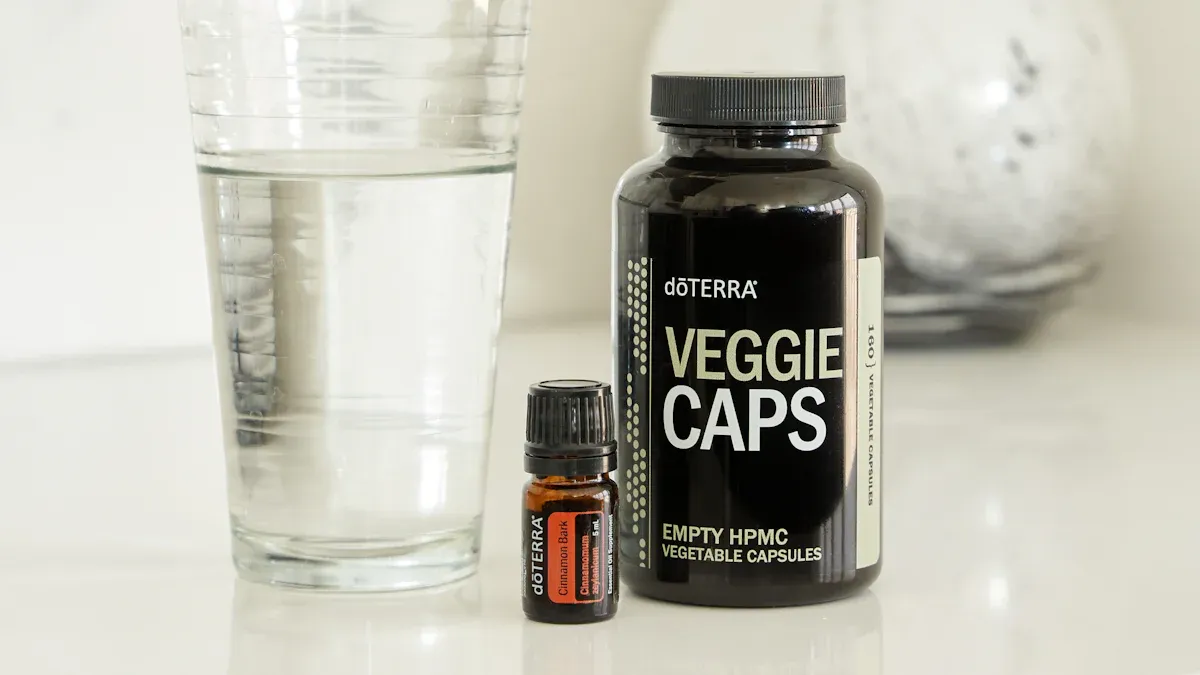
HPMC is used to make capsules, especially for people who do not want animal products. HPMC capsules do not break down in stomach acid, so they are good for delayed-release medicines. They have less water than gelatin capsules, which helps protect sensitive drugs. HPMC capsules keep their shape in dry air and do not break down easily.
A study showed that HPMC capsules release medicine more slowly in acid than gelatin capsules. This can help drugs that need to pass through the stomach before they start working.
When you look at hpmc uses in medicine, you see it helps in many ways. It controls how fast drugs come out, protects them, helps them stick to tissues, and makes them safer for your eyes and easier to take as capsules.
When you take a tablet with HPMC, something interesting happens. As soon as the tablet touches water in your stomach, HPMC swells and forms a gel-like layer around the tablet. This gel barrier acts as a shield. It controls how water moves into the tablet and how the drug moves out. Here is what happens step by step:
You can see how different conditions affect gel formation:
| Experimental Condition | Observations |
| 3.0 wt% HPMC solution | Gel forms as temperature rises. |
| Thermal ramp at 1 °C/min | Three phases: liquid, phase separation, and gel. |
| Time sweep tests | Gel forms quickly, but keeps changing slowly over time. |
| Frequency sweep tests | Gel gets stronger as temperature increases. |
HPMC helps control how fast your body gets the medicine. When water touches the tablet, HPMC forms a hydrogel. This hydrogel changes how the drug moves out. Here is how the process works:
Studies show that the size and solubility of the drug affect how fast it leaves the HPMC matrix. Both simple and detailed models help predict how the drug will release.
HPMC also helps medicines stick to wet surfaces and keeps particles floating in liquids. You see these hpmc uses in eye drops, nasal sprays, and liquid medicines. HPMC increases the thickness of the liquid, so drug particles do not settle at the bottom. It also helps the medicine stay on tissues longer, which means better results.
HPMC is a common choice for making sure your medicine works the way it should, whether in tablets, liquids, or gels.
When picking HPMC for medicine, you must think about viscosity and molecular weight. These two things change how HPMC acts in tablets or capsules.
A study tested different viscosity grades of HPMC with mannitol. The scientists saw that the grade and amount of HPMC changed how the tablet released the drug and how strong the tablet was. Picking the right viscosity grade is important for both drug release and tablet strength.
You need to check if HPMC works well with your drug.
You should always test how your drug mixes with HPMC before making new medicine.
How you make the medicine changes how HPMC works. The temperature you use to hydrate HPMC can change the final product.
| Processing Condition | Effect on HPMC Performance |
| Hydration Temperature > 50°C | Bad for how the tablet looks, makes the surface rough |
| Hydration Temperature 25°C | No change in how the tablet looks, gives more choices |
| Hydration Temperature < 10°C | Best for making a strong gel, but harder to use in big batches |
If you hydrate HPMC at high heat, the tablet may look rough and cloudy. Room temperature hydration gives more choices and keeps the tablet looking nice. Cold hydration makes a strong gel, but it is harder to use for big batches.
You need to balance these things to get the best results from your HPMC medicine.
HPMC gives many good things when used in medicine. This polymer helps drugs work better and makes them safer. HPMC loves water, so it helps drugs dissolve and get into your body. It lets medicine come out at a steady speed, which keeps drug levels even. HPMC does not react much with other drugs, so results stay the same. It works in many medicines because it does not change with pH. HPMC also sticks to wet places, so drugs stay where they should.
Here is a table that shows the main benefits:
| Benefit | Description |
| Hydrophilic properties | Helps drugs dissolve and get absorbed. |
| Minimal drug interactions | Keeps drug effects steady and safe. |
| Consistent drug release profiles | Gives you reliable and predictable drug release. |
| pH-independent behavior | Works well even when pH changes in your body. |
| Enhanced mucoadhesive capabilities | Sticks to wet surfaces, helping drugs stay in place. |
HPMC helps you get the right amount of medicine at the right time, making treatments more effective.
There are some problems with HPMC too. Sometimes, HPMC does not keep particles mixed as well as other things. High viscosity types can make tablets strong, but the coating might peel off. Making HPMC capsules is hard because it needs special ways, which can make the quality different.
Here is a table that lists some common drawbacks:
| Limitation | Description |
| Performance | May not keep particles mixed as well as other materials. |
| Adhesion | High viscosity can cause the coating to peel off tablets. |
| Manufacturing | Needs special methods, which can make capsule quality less consistent. |
You need to think about these problems and the good things when picking HPMC for medicine.
HPMC will be used in new ways soon. Scientists are finding ways to make medicine just for you. They can change HPMC formulas to fit what you need, so you get the best results. HPMC is good for the earth because it breaks down and is not harmful. Scientists use HPMC to make new drug systems, like hydrogels, that can send drugs to the right spot and let them out slowly.
The future for HPMC in medicine is bright, with new ways to help you get safer and better treatments.
HPMC is used in lots of medicines today. It helps drugs come out slowly and stick to body tissues. HPMC also keeps medicine stable so it works well. You can find HPMC in tablets and capsules. It is also used in new things like 3D printing for medicine. The table below shows what HPMC does in different uses:
| Application Area | Key Features |
| Oral Sustained Drug Release | Many viscosity grades for slow and steady drug release |
| Oromucosal Delivery Systems | Sticks well to wet surfaces |
| Amorphous Solid Dispersions | Helps drugs dissolve better |
| 3D Printed Drug Products | Good for making new types of medicine |
| Nanoparticle-based Formulations | Ssed for vaccines and special drug delivery |
HPMC will be in even more medicines soon. Scientists are always finding new ways to use HPMC. This helps make medicine safer and smarter.
You can trust HPMC in your medicine. Scientists test it for safety. The FDA approves HPMC for use in drugs. Most people do not have side effects. You should always follow your doctor’s advice.
Yes, you can use HPMC capsules. They come from plants, not animals. Many companies make HPMC capsules for people who do not eat animal products. You can check the label for “vegetarian” or “vegan.”
HPMC forms a gel when it touches water. This gel slows down how fast the medicine leaves the tablet. You get a steady amount of medicine over time. Doctors use this to help you take fewer doses.
You should keep HPMC medicines in a cool, dry place. Avoid heat and moisture. HPMC helps protect the medicine, but you still need to follow storage instructions on the package.


