


Can hydroxypropyl methyl cellulose be used as an additive in animal feed?
21 October, 2026

You can check how HPMC performs in hot and cold water by making samples. Mix it with water at different temperatures and watch what happens. Water temperature changes how HPMC performs, melting and spreading out differently. First, measure and put HPMC in water. Then mix it with a spoon or stirrer. Look for lumps, gel, and how fast the powder spreads. Notice if the texture or thickness changes. Use what you see to pick the best way for your needs.
Hydroxypropyl methylcellulose (HPMC) is a polymer that dissolves in water. People use it in many industries. You can find it in construction, food, medicine, and cosmetics. There are different kinds of HPMC. Each kind has its own special features. You can sort HPMC by how much it is changed, how thick it is, and what it is used for. The table below shows some common types and their uses:
| Classification Criteria | Common Types of HPMC | Applications |
| Degree of Substitution | Low-substituted HPMC (L-HPMC) | Tablet disintegrant, fast-dissolving material |
| Conventional Hydroxypropyl Methylcellulose | Construction, pharmaceuticals, food | |
| Viscosity | Low viscosity (5~100 mPa·s) | Liquid spray, food, low viscosity coatings |
| Medium viscosity (100~5000 mPa·s) | Adhesives for building materials, pharmaceutical tablets | |
| High viscosity (5000~200000 mPa·s) | Construction, ceramics, high-efficiency thickening | |
| Application Field | Construction grade HPMC | Cement-based mortar, putty powder, tile adhesives |
| Pharmaceutical grade HPMC | Tablet coating, sustained release skeleton material, capsule fillers | |
| Food grade HPMC | Thickener, emulsifier stabilizer, dough improver | |
| Cosmetic grade HPMC | Skin care, washing products, hair dyes |
You can also find surface-treated, non-surface-treated, and hot-soluble HPMC. Each one acts differently in water.
Water temperature changes how HPMC works. You will see changes in how it melts, spreads, and forms gel.
Tip: If you want a smooth mix, use cold water for surface-treated HPMC. If you want a gel fast, use hot water with hot-soluble HPMC.
Studies show that when water gets hotter, the thickness and gel strength of HPMC change. For most HPMC types, the gel point is about 61°C. When the water is hotter, thick HPMC becomes less stretchy and more like a gel. You will see the mix is less stretchy and more gel-like as it gets hotter.
You can use these facts to pick the best HPMC and mixing way for your job. Knowing how temperature changes HPMC helps you get the best results when you use it.
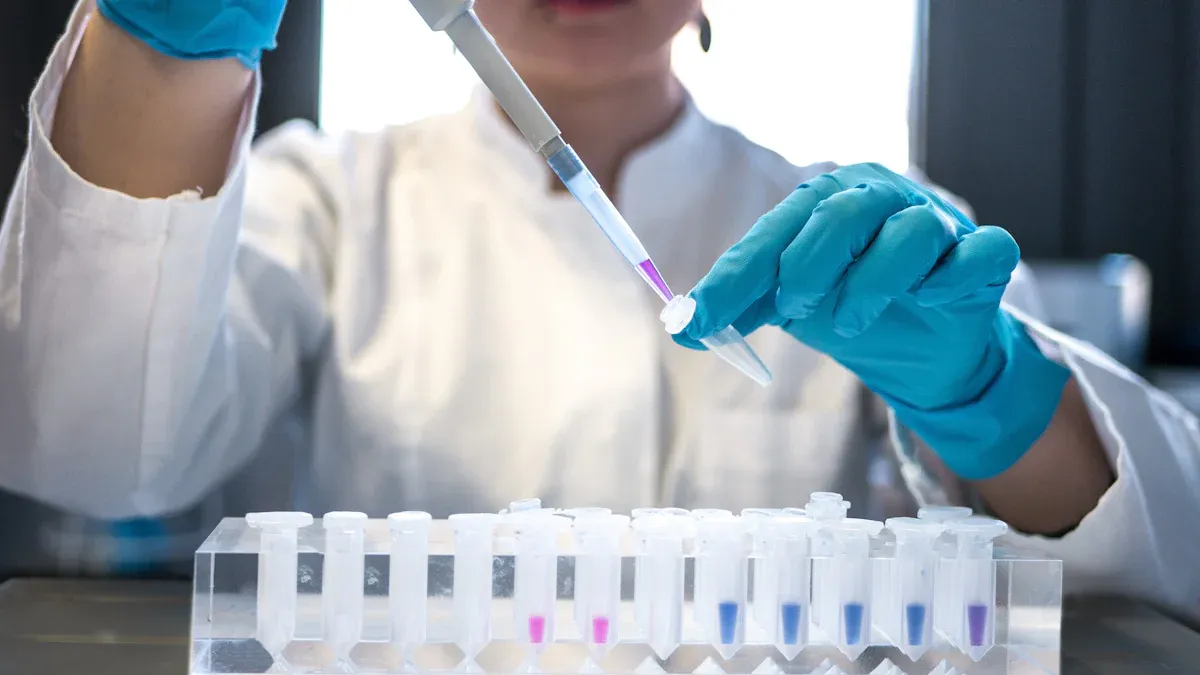
You can test how HPMC perform in cold water by following a clear process. Start with clean equipment and pure water. Use a mixing vessel that does not react with chemicals. Measure the right amount of distilled or deionized water. Keep the water temperature around 20–30°C for best results.
Tip: Always add HPMC powder slowly and keep stirring. Never dump all the powder at once. Cold water helps HPMC perform better by making the mixture smooth and easy to handle.
You can adjust the mixing time and temperature based on the molecular weight of HPMC. Higher molecular weight may need longer stirring or slightly warmer water. Always use purified water to avoid impurities that can affect how HPMC perform.
Testing how HPMC perform in hot water needs careful steps. Hot water can make HPMC swell or form gel quickly, so you must control the process.
| Step | Description |
| 1 | Heat water to 70–85°C. Use a thermometer to check the temperature. |
| 2 | Slowly sprinkle HPMC powder into the vortex made by a high-speed mixer (≥500 rpm). |
| 3 | Watch the powder float for the first 3 minutes. After 10 minutes, the particles absorb water and start to swell. |
| 4 | Keep stirring as the mixture cools down to 40°C. This helps HPMC hydrate and dissolve better. |
| 5 | Never add HPMC directly into hot water without stirring. This can cause clumping and poor results. |
You can also use the quick bonding method. Pre-heat part of the water to 60–70°C. Add HPMC powder while mixing at 600–800 rpm. Then pour in the rest of the cold water (10–25°C) slowly. This helps control gel formation and makes the mixture more uniform.
Note: Hot water above 60°C does not dissolve HPMC well. It can only swell the powder. For best results, always add HPMC gradually and keep stirring until the mixture cools.
After mixing, you need to observe how HPMC perform in both hot and cold water. Look for changes in solubility, viscosity, and gel formation.
Tip: Always check viscosity and uniformity after mixing. Accurate measurement ensures you get the right performance from HPMC in your application.
You can repeat these tests with different water temperatures to see how HPMC perform changes. Cold water usually helps HPMC dissolve and spread better. Hot water can make HPMC swell or form gel, but may not dissolve it fully. Use your observations to choose the best method for your needs.
When you test HPMC in cold water, you see some changes. The powder clumps at first. If you keep stirring, it dissolves and gets thick. The mixture gets thicker slowly as the powder soaks up water. Small particles dissolve faster and make the mix smoother. If HPMC has more hydroxypropyl, it dissolves better and makes a strong film. HPMC with lower molecular weight is easier to dissolve, but it does not get very thick. You can see these differences in the table below:
| Factor | Impact on HPMC Performance in Cold Water |
| Chemical Composition | Higher hydroxypropyl substitution improves solubility |
| Molecular Weight | Higher molecular weight increases viscosity |
| Particle Size | Finer particles dissolve faster |
People measure viscosity at 20°C. Some HPMC grades are thin, with viscosity at 5 mPa·s. Others are thick, with viscosity over 100,000 mPa·s. The solution gets thicker as you stir and let it soak.
When you test HPMC in hot water, you see other changes. The powder spreads fast and does not clump. HPMC does not dissolve in hot water, but it swells and makes a clear, thick mix if you stir enough. Gel starts to form when the water is hotter than 60°C. The mixture gets thick very quickly as the gel forms. You can use the table below to compare cold and hot water results:
| Condition | Solubility | Viscosity Behavior |
| Cold Water | Soluble, forms viscous solution | Tends to clump, viscosity increases gradually |
| Hot Water | Rapid dispersion | Viscosity increases sharply, forms gel |
When you cool the mix, the gel turns back into liquid. This change helps you control texture in food or building mixes.
Pick your mixing method based on what you need. If you want a smooth, thick mix, use cold water and stir well. If you want gel fast, use hot water and keep stirring. In building work, high heat can lower HPMC’s water holding and thickening power. If you work in hot places, you may need HPMC with a higher gel temperature for better results. Always check viscosity, gel temperature, and particle size for your job. These things help you get the best results when you test HPMC in different water temperatures.
Tip: Measure viscosity at the right temperature for your product. Control moisture and particle size to stop clumping and get steady results.
When you test HPMC in water, some problems can happen. You might see clumps, uneven thickness, or poor mixing. You can fix these problems by changing how you mix and using better steps.
Clumping means HPMC does not spread well in water. You might see lumps or powder that does not dissolve. This often happens if you add HPMC too fast or use the wrong water temperature.
Tip: Always add HPMC while stirring. This stops lumps and helps make the mix smooth.
Sometimes your mix is too thick or too thin. This can happen if you use the wrong amount, wrong water temperature, or do not mix long enough.
| Step | Action |
| 1 | Add HPMC between 0.1% and 0.6% for building use. |
| 2 | Change the amount based on your tests. |
| 3 | Try small tests to find the best amount. |
Note: Room temperature and air moisture change thickness. If it is hot or dry, you may need more HPMC to keep water in.
Bad mixing makes the mixture uneven and lowers quality. You can make mixing better by following these tips:
😊 Good mixing gives you even texture and steady results in your product.
If you use these steps, you can fix most problems when testing HPMC. You will get smoother mixes, steady thickness, and better results in your work.
You will get good results if you test HPMC the right way in hot and cold water. Always add the powder slowly and mix it well. Look for changes in how thick it gets and if it forms gel. Water temperature changes how HPMC dissolves and gets thick.
You should add HPMC powder slowly while stirring. Use a low-speed mixer to avoid bubbles. Let the mixture stand for one hour to hydrate fully.
HPMC swells quickly in hot water. If you add the powder too fast, it forms lumps. You can prevent clumping by stirring constantly and adding the powder gradually.
You can use a Brookfield viscometer. Pour your HPMC solution into the device and record the reading. Always check viscosity at the temperature you need for your application.
You should use distilled or deionized water. Tap water contains minerals that can affect HPMC performance. Pure water gives you more reliable results.


